

Dental Bone Grafts in Boston
Rebuild the Foundation Your Implants Depend On
What Is a Dental Bone Graft?
Rebuilding jawbone to support a future dental implant.
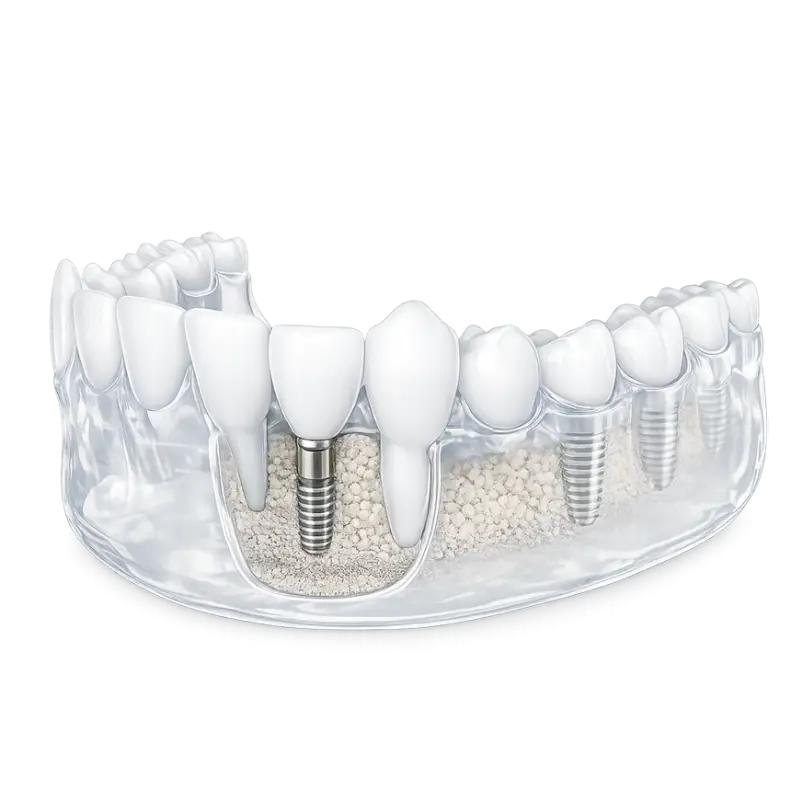
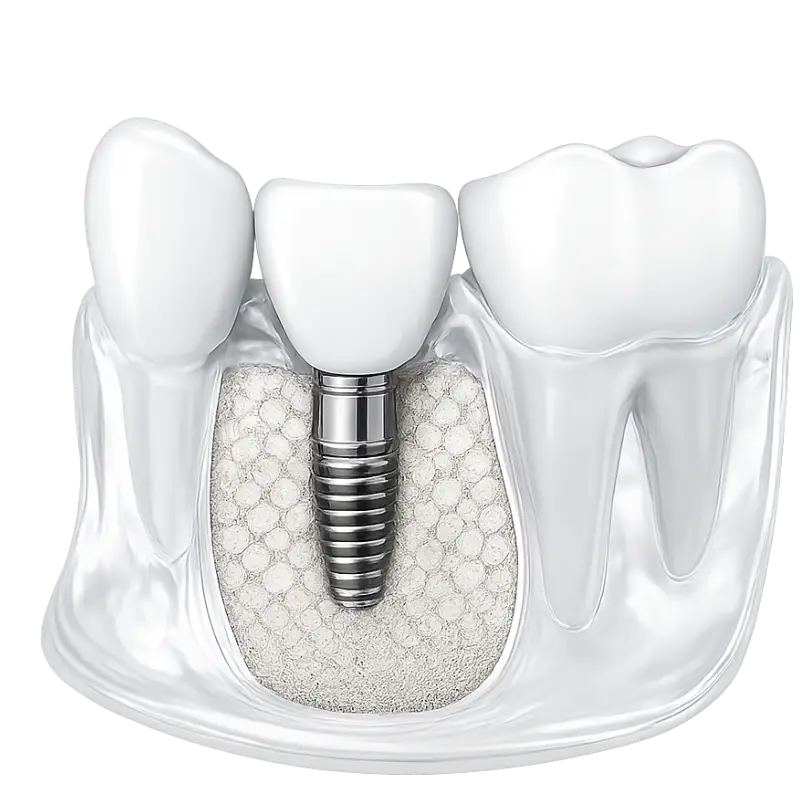
A dental bone graft adds volume and density to your jawbone — either to repair damage from gum disease, to preserve the socket after an extraction, or to rebuild bone volume before an implant can be placed.
At Metro Dental, bone grafts are planned with the final implant in mind. Dr. Fedorenko and Dr. Ford perform graft placement, healing follow-up, and implant integration as one continuous in-house pathway — not handed off between offices.
Why Patients Choose In-House Grafting
- Surgical expertise in-house | Bone surgery is a core focus of our implant-centered practice — precision matters.
- Planned with implants | Graft placement anticipates the exact implant position planned from your CBCT scan.
- Multiple material options | Autograft (your own bone), allograft (donor), xenograft, or synthetic — matched to your case.
- Faster overall timeline | No cross-referral — one office handles graft + implant sequentially.
- Sedation available | Oral sedation for anxious patients or longer procedures.
- Written estimate | Graft + implant plan priced together before surgery.
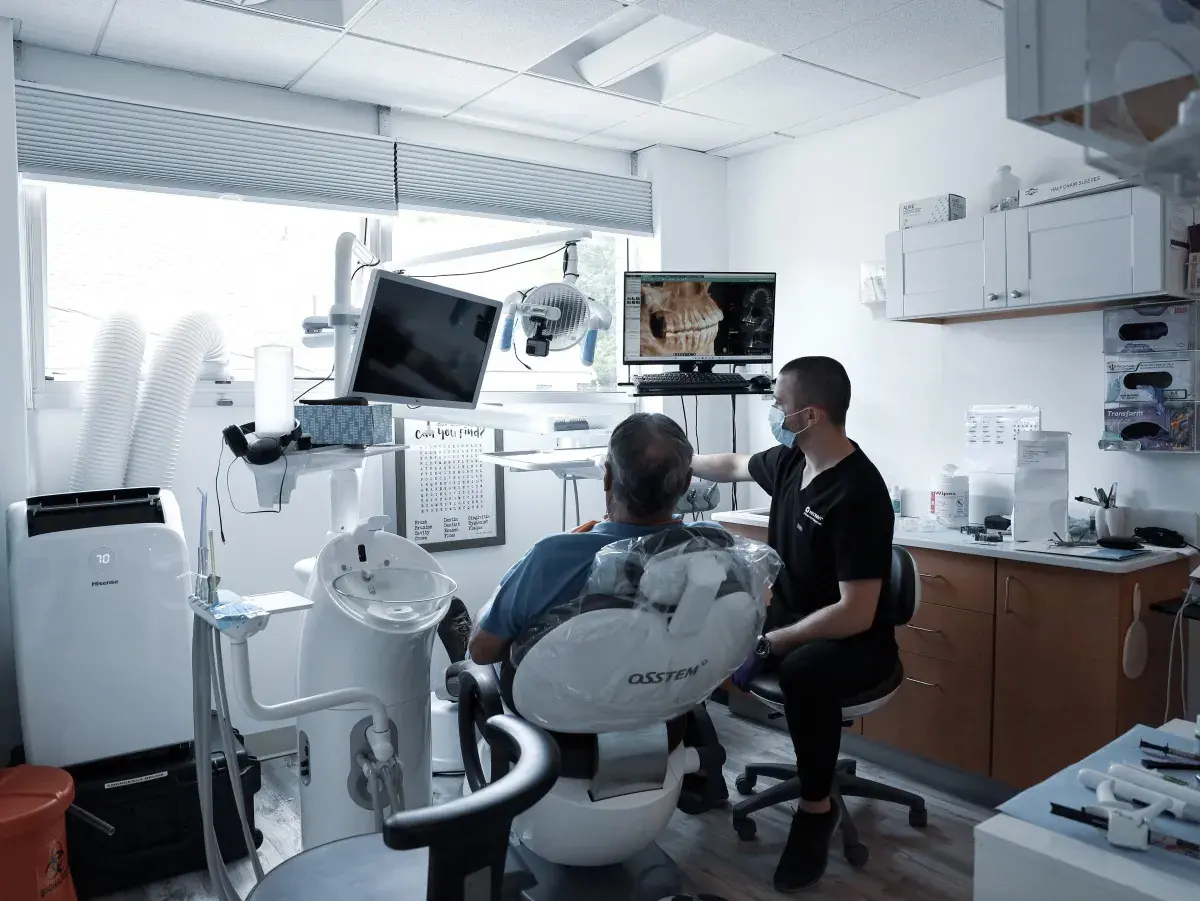
Who Needs a Bone Graft?
Long-term tooth loss
Bone resorbs quickly after tooth loss — grafts rebuild what is needed for an implant.
After an extraction
Socket preservation grafts prevent bone loss while the site heals.
Severe gum disease
Gum disease destroys supporting bone — grafts can rebuild lost volume.
Planning for implants
Your CBCT shows insufficient bone to place an implant safely.
Failed previous graft
Revision grafting when a prior attempt did not integrate.
Trauma recovery
Accidents that damaged bone — rebuilding for future restoration.
Why Metro Dental for Your Bone Graft
In-house surgical care
Bone and gum surgery is a core focus of our practice, performed in-house by Dr. Fedorenko and Dr. Ford.
CBCT 3D planning
Every graft planned from a 3D scan showing exact bone volume needed.
Integrated with implant
Graft is timed and positioned for the specific implant placement planned afterward.
Written, sequenced pricing
Graft + implant + crown costs all laid out before you commit.
Your Bone Graft Journey
Consultation & CBCT Scan
Confirms bone deficiency and determines the graft type and volume needed.
Grafting Surgery
Graft material placed under local anesthesia with optional sedation. Closed with sutures.
Healing & Integration
4–6 months for the graft to integrate with your native bone.
Follow-Up Imaging
A second CBCT confirms successful integration before implant placement.
Implant Placement
Once bone is ready, the planned implant is placed — same office, same care team.
Answers About Bone Grafts
4–6 months for full integration with native bone, confirmed by follow-up imaging before implant placement.
Surgery is under local anesthesia — most patients report mild-to-moderate soreness for 2–4 days after, managed with OTC pain relievers.
Depends on graft size and material. You receive a written estimate with the overall implant plan at consultation.
Autograft (your own bone), allograft (tissue-bank donor), xenograft (bovine), and synthetic. We match material to case.
Portions may be covered when the graft is medically necessary. We accept Blue Cross Blue Shield of Massachusetts (Indemnity) and Delta Dental (Premier) directly; for other carriers we submit claims on your behalf.
Sometimes — for extraction + immediate implant + socket graft cases. Your CBCT shows whether this is safe.
Rarely, a graft doesn't integrate fully. We reassess with imaging and can perform a revision graft if needed.
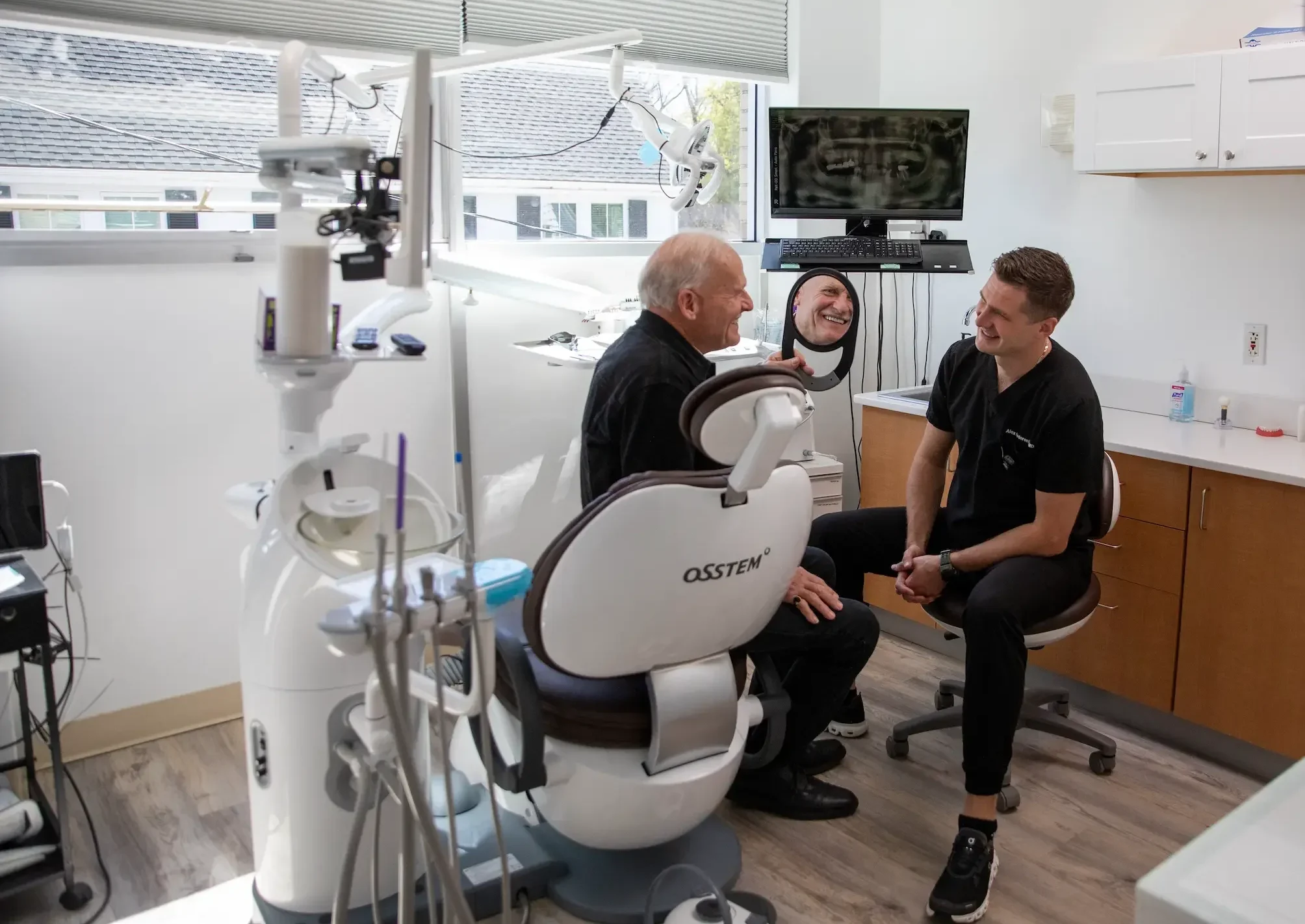
Foundation First, Implant Second
A successful implant depends on the bone beneath it. Our graft-to-implant pathway is planned as one coordinated treatment by Dr. Fedorenko and Dr. Ford — with CBCT imaging at every step.
Thank you — our Lexington team will reach out within one business day.