

Wisdom Teeth Removal in Boston
Careful Third-Molar Extraction in an Implant-Focused Office
Why Wisdom Teeth Often Need Removal
Third molars frequently cause pain, infection, or damage to neighboring teeth.
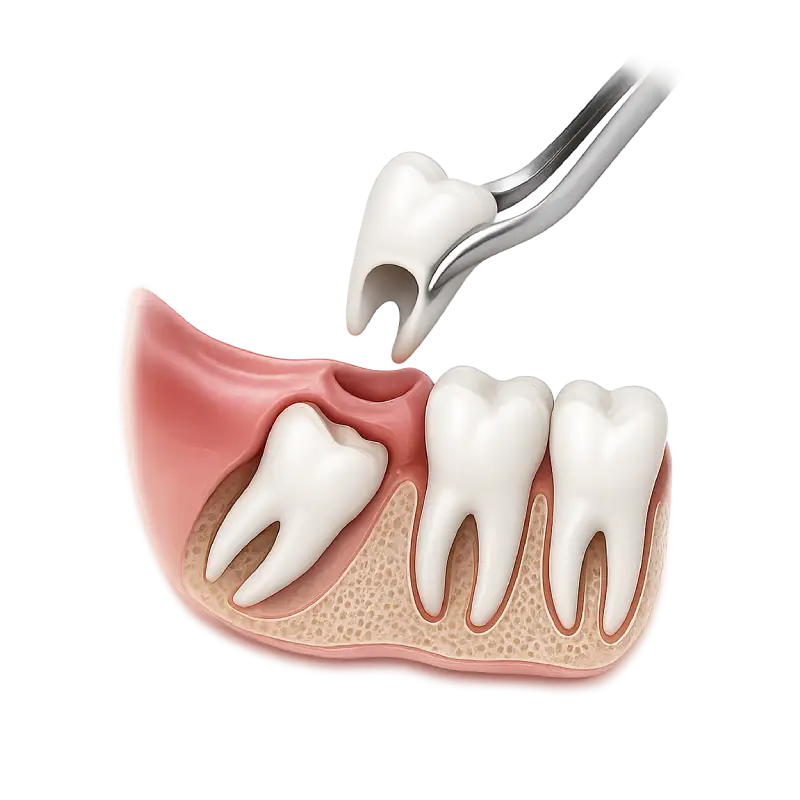
Wisdom teeth — the third molars that typically emerge in your late teens or early 20s — often cause problems. They may grow in at an angle (impacted), fail to erupt fully (partial impaction), crowd existing teeth, or develop cysts. Many patients experience pain, infection, or difficulty cleaning around them.
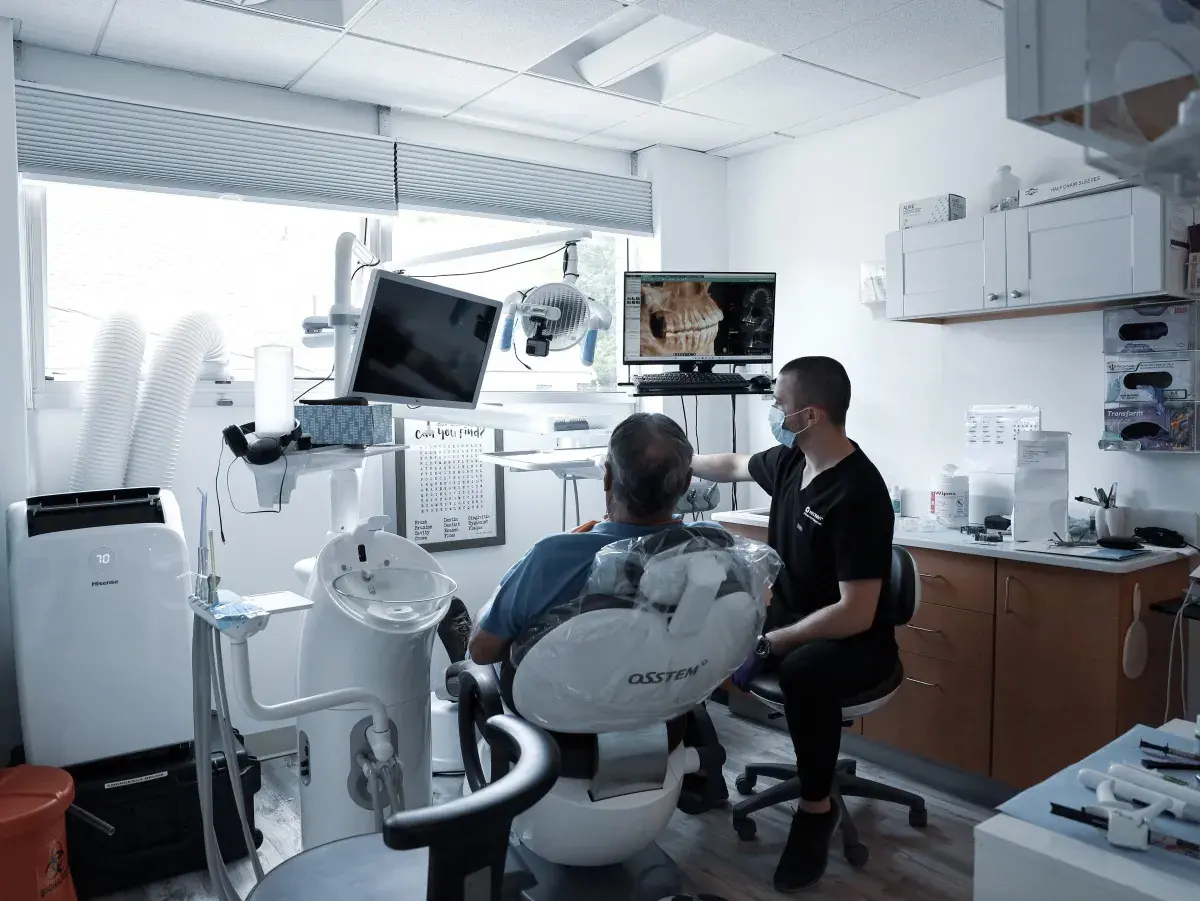
At Metro Dental, Dr. Fedorenko and Dr. Ford perform wisdom tooth extractions in-house at our Lexington office — with CBCT 3D planning to map nerve proximity, sedation options for comfort, and a clear post-operative protocol.
Why Remove Wisdom Teeth
- Prevents infection | Partially erupted wisdom teeth trap bacteria and food, leading to chronic infections.
- Relieves pressure | Impacted wisdom teeth push neighboring teeth, causing pain or misalignment.
- Prevents cyst formation | Impacted teeth occasionally develop cysts or tumors — removal eliminates this risk.
- Avoids damage to second molars | Angled wisdom teeth can damage the roots of adjacent teeth.
- CBCT nerve mapping | 3D imaging identifies nerve proximity — reducing risk of numbness complications.
- Sedation available | Oral sedation keeps anxious patients comfortable during longer procedures.
Do You Need Wisdom Teeth Removed?
Pain at the back of your jaw
Often a sign of erupting or impacted wisdom teeth.
Recurring gum infections
Partially erupted wisdom teeth trap bacteria and cause chronic inflammation.
Crowded or shifting teeth
Wisdom tooth pressure can undo orthodontic work.
Cyst on imaging
Dental imaging sometimes reveals cysts around impacted teeth — removal is essential.
Preventive assessment
Even without symptoms, many patients remove wisdom teeth proactively before problems develop.
Before orthodontic or restorative work
Removal pre-empts future complications with new restorations.
Why Metro Dental for Wisdom Teeth
Surgical-grade tissue management
Surgical extractions benefit from advanced tissue-management and suturing techniques — performed in-house by Dr. Fedorenko and Dr. Ford.
CBCT nerve mapping
3D imaging identifies the inferior alveolar nerve to minimize post-op numbness risk.
Sedation options
Local anesthesia standard; oral sedation for anxious patients or complex cases.
Same-office follow-up
You see your treating doctor (Dr. Fedorenko or Dr. Ford) at every post-op visit — no hopping between offices.
Your Wisdom Teeth Treatment
Consultation & CBCT
Exam and 3D imaging to assess impaction and nerve proximity.
Extraction
Local anesthesia with optional sedation. Most cases completed in 30–90 minutes.
Post-Op Recovery
3–7 days for soft tissue healing. Clear written post-op instructions provided.
Follow-Up Visit
Suture check and healing confirmation at our Lexington office.
Answers About Wisdom Teeth Removal
Most cases run 30–90 minutes depending on how many teeth are removed and whether any are impacted. Surgical (impacted) extractions take longer than simple ones.
Surgery is performed under local anesthesia — most patients report mild-to-moderate soreness for 3–7 days afterward, managed with OTC or short-course prescription pain relievers. Oral sedation is available for anxious patients or more complex cases.
Initial soft-tissue healing takes 3–7 days. Most patients return to normal activity within 2–3 days; plan light activity for the first 48 hours. Full bone healing of the extraction site takes several weeks.
Dry socket happens when the protective blood clot dislodges from an extraction site, exposing bone and nerves. To reduce the risk: no smoking, no straws, no spitting, and no vigorous rinsing for the first 72 hours. We provide written post-op instructions covering exactly what to do.
Local anesthesia is standard and sufficient for most extractions. Oral sedation is offered for anxious patients, longer surgical extractions, or multi-tooth removal in one visit. If sedated, you will need a designated driver.
Late teens to early twenties is the most common window — roots are not yet fully formed, healing is fastest, and the risk of nerve complications is lowest. Removal is still possible at any age when problems develop.
Often yes, at least partially, when the extraction is medically necessary (impaction, infection, cyst). We accept Blue Cross Blue Shield of Massachusetts (Indemnity) and Delta Dental (Premier) directly. For other carriers, we submit claims on your behalf.
Problematic Wisdom Teeth, Predictably Resolved
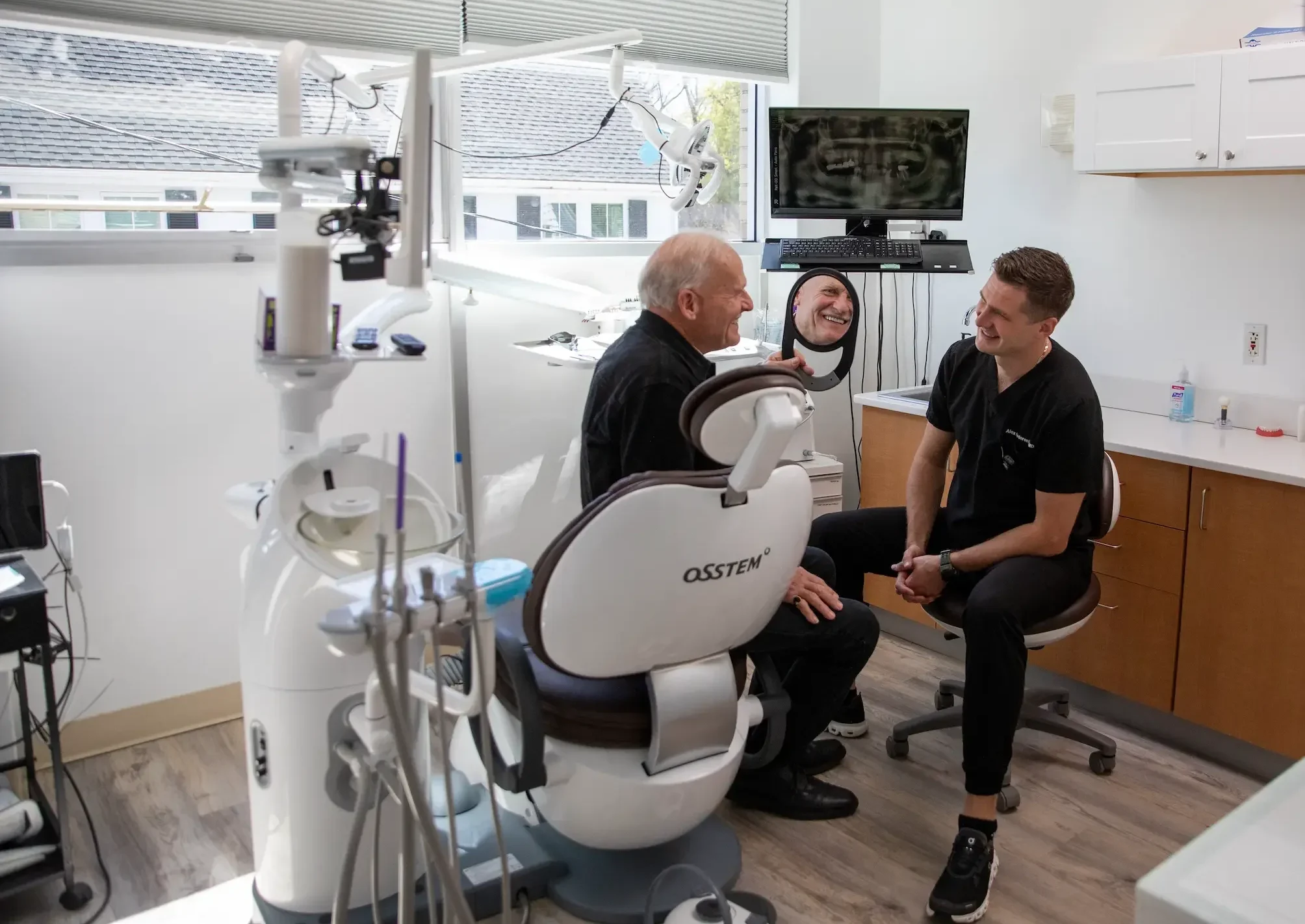
Every wisdom tooth extraction at Metro Dental starts with CBCT imaging and finishes with same-office follow-up. Sedation options and clear post-op instructions make the process predictable.
Thank you — our Lexington team will reach out within one business day.